How to Build a Python Web App With Ollama in 2026
Learn to build a Python web app with Ollama in April 2026. Get streaming responses, model selection, and real auth using Reflex—no JavaScript needed.
Tom GotsmanTLDR:
- Ollama runs LLMs locally on your hardware, keeping data on-premises and eliminating per-token API costs
- Reflex lets you build production chat UIs around Ollama in pure Python without touching JavaScript
- You get streaming responses through WebSockets, model selection dropdowns, and real auth, all server-side
- Reflex is an open-source Python framework that builds full-stack web apps, trusted by 40% of Fortune 500 companies
Local AI changed the calculus for Python developers this year. Ollama has become the de facto standard CLI tool for running local LLMs in 2026, driven by data privacy mandates, unpredictable API pricing, and growing need for offline-capable workflows. Instead of routing sensitive data through a cloud API, you run the model on your own hardware. No network calls. No per-token billing surprises. No vendor dependency.
Under the hood, Ollama wraps llama.cpp inference behind a simple REST API, abstracting model quantization, GPU memory allocation, and model file management. That means a Python developer can pull a model and start querying it locally in minutes. Running LLMs locally with Ollama keeps sensitive information on-premises, reduces latency by eliminating remote server communication, and gives industries like healthcare and finance actual control over model configurations.
The problem has always been the frontend. Python developers who want to wrap Ollama in a real web interface either learn React or settle for something that looks like a prototype forever.
That's where Reflex fits. We built a full-stack Python framework so developers never have to touch JavaScript. You get a production-ready web app, real state management, and a clean UI around your Ollama integration--all in pure Python. No React, no Next.js, no context switching.
By the end of this tutorial, you'll have a working chat web app that talks to a locally-running Ollama instance. Here's what the finished app does:
- Lets users select from any Ollama model installed on their machine
- Accepts prompt input through a chat-style interface
- Streams LLM responses back in real-time as tokens arrive
- Updates the UI automatically via WebSocket, with no page refresh needed
The interaction loop is straightforward. A user submits a prompt, Reflex's backend state calls the Ollama Python library with stream=True, and tokens flow back through a WebSocket connection as they're generated. The component library handles all the display logic, so you won't be wiring up any manual polling or frontend event listeners.
What makes this setup worth building is the infrastructure story. Everything runs on your local machine. No external API keys, no per-token costs, no data leaving your environment. That matters for industries with compliance requirements, offline workflows, or any situation where you'd rather not send user input to a third-party server.
Most chat app tutorials assume you're calling out to a hosted model like Claude Opus 4.6 or Gemini 3.1 Pro. Ollama flips that assumption. You get the same streaming response pattern, but the model runs entirely in your own process. The tradeoff is hardware requirements, but the privacy and cost benefits are real for the right use cases.
Getting Ollama talking to Reflex requires two installs and one command. First, install the Ollama Python SDK with pip install ollama, then install Reflex with pip install reflex. Before running anything, make sure the Ollama server is active locally. Once it's running, pull a model to use in the app. From there, you can verify the setup is working by listing available models through the SDK.
One network note worth flagging: by default, Ollama binds to localhost only. If you expose it on all interfaces without a firewall, anyone on your local network can query your models. Keep that in mind before changing any binding settings.
Here's where Reflex's architecture pays off. Reflex state classes are plain Python classes, which means you import the Ollama SDK exactly like any other library. No wrappers, no adapters. Your event handlers call ollama.chat() or ollama.generate() directly, and the return values go straight into state variables.
Unlike cloud API integrations, local Ollama instances require zero credentials. No API keys, no environment variables to configure. The SDK connects to localhost by default and handles the rest.
For streaming responses, Reflex background tasks are the right tool. They let you yield partial state updates as tokens arrive, pushing each chunk to the UI through Reflex's WebSocket connection without blocking the event loop. The UI rerenders on each yield automatically, with no polling or manual refresh logic required.
Reflex's component library gives you 60+ pre-built UI elements, including inputs, containers, buttons, and dropdowns, all defined in Python. No HTML templates, no JSX, no CSS-in-JS. The styling system handles responsive layouts through Python keyword arguments, so your chat interface adapts to different screen sizes without a separate stylesheet.
A chat UI in Reflex is a composition of Python functions. A message container wraps a scrollable list of chat bubbles, a text input field captures the prompt, and a submit button triggers the event handler. Each component accepts styling props directly, keeping layout logic co-located with structure. The result is a readable, single-file app that any Python developer can scan and understand without frontend knowledge.
The streaming pattern is where Reflex's architecture earns its keep. Your event handler iterates over the Ollama streaming response, appending each token chunk to a state variable, then yields after each update. Reflex pushes that state delta to the browser over WebSocket automatically, producing a live typing effect with no JavaScript and no polling. Ollama's 2026 multimodal and 4-bit quantization support, so large models run efficiently on consumer hardware and that stream arrives fast.
Model selection lives entirely in state. On app load, an event handler calls the Ollama SDK to fetch installed models and stores the list in a state variable. A dropdown reads from that variable and updates a selected model on change. When the user submits a prompt, the event handler passes that selection directly into the Ollama API call, with no client-side logic anywhere.
Shipping your Ollama app to production requires one architectural decision upfront: where does the model run? local LLMs have become core developer tools, but production deployment is still a different problem than local development.
reflex deploy handles the Reflex app itself cleanly, but Ollama needs a running local service, which cloud deployments don't include by default. For teams who want a cloud frontend, Reflex supports hybrid deployment architectures where the frontend lives on Reflex Cloud infrastructure while the backend connects to services running in your own environment. Point the cloud frontend at your on-premises backend URL and Ollama stays entirely within your network.
For true local-first deployments, self-hosting keeps everything co-located. Run Ollama as a system service so it restarts automatically. Configure firewall rules to restrict which hosts can reach port 11434. Monitor VRAM usage as loaded models stay resident in GPU memory, and account for disk space per model file.
Ollama ships with no built-in authentication. In production, you need to handle that at the application layer. Reflex's authentication integrations with Clerk, Okta, or Azure Auth let you gate access before any prompt reaches the model. For industries with strict compliance requirements, running both Reflex and Ollama inside a private VPN means inference never touches an external network.
| Deployment Target | Ollama Location | Best For | Configuration Notes |
|---|---|---|---|
| Local Development | localhost:11434 | Prototyping, Testing | Default setup, no auth required |
| Self-Hosted Server | Same server as Reflex | Internal tools, Team apps | Configure firewall, monitor resources |
| VPC Deployment | Private network endpoint | Enterprise, Compliance | Network isolation, application-layer auth |
| Hybrid Cloud | On-premises backend | Compliance-driven industries | Frontend on Reflex Cloud, backend on-prem |
Yes. Reflex is a full-stack Python framework that handles both frontend and backend, so you can build a complete Ollama-powered web app using only Python. You get production-ready UI components, real-time streaming, and state management without touching React or Next.js.
Reflex gives you the cleanest path from Ollama integration to production web app. Unlike Streamlit (which has memory leaks and no real state management) or building custom React frontends, Reflex provides 60+ UI components, WebSocket-based streaming, and single-command deployment--all in pure Python.
Reflex uses background tasks with yield statements to push token chunks to the browser as they arrive from Ollama. Each yield triggers an automatic state update over WebSocket, creating a live typing effect without polling or manual refresh logic. The streaming pattern works identically whether you're calling Ollama locally or a cloud API.
For industries with compliance requirements or offline workflows, self-host both Reflex and Ollama on the same server or within a private VPC. For teams wanting cloud convenience, Reflex supports hybrid deployments where the frontend lives on Reflex Cloud while connecting to your on-premises Ollama backend, keeping model inference entirely within your network.
Local Ollama instances keep sensitive data on-premises (critical for healthcare and finance), eliminate per-token API costs, remove vendor dependency, and work offline. The tradeoff is hardware requirements, but multimodal models with 4-bit quantization run efficiently on consumer GPUs in 2026.
More Posts
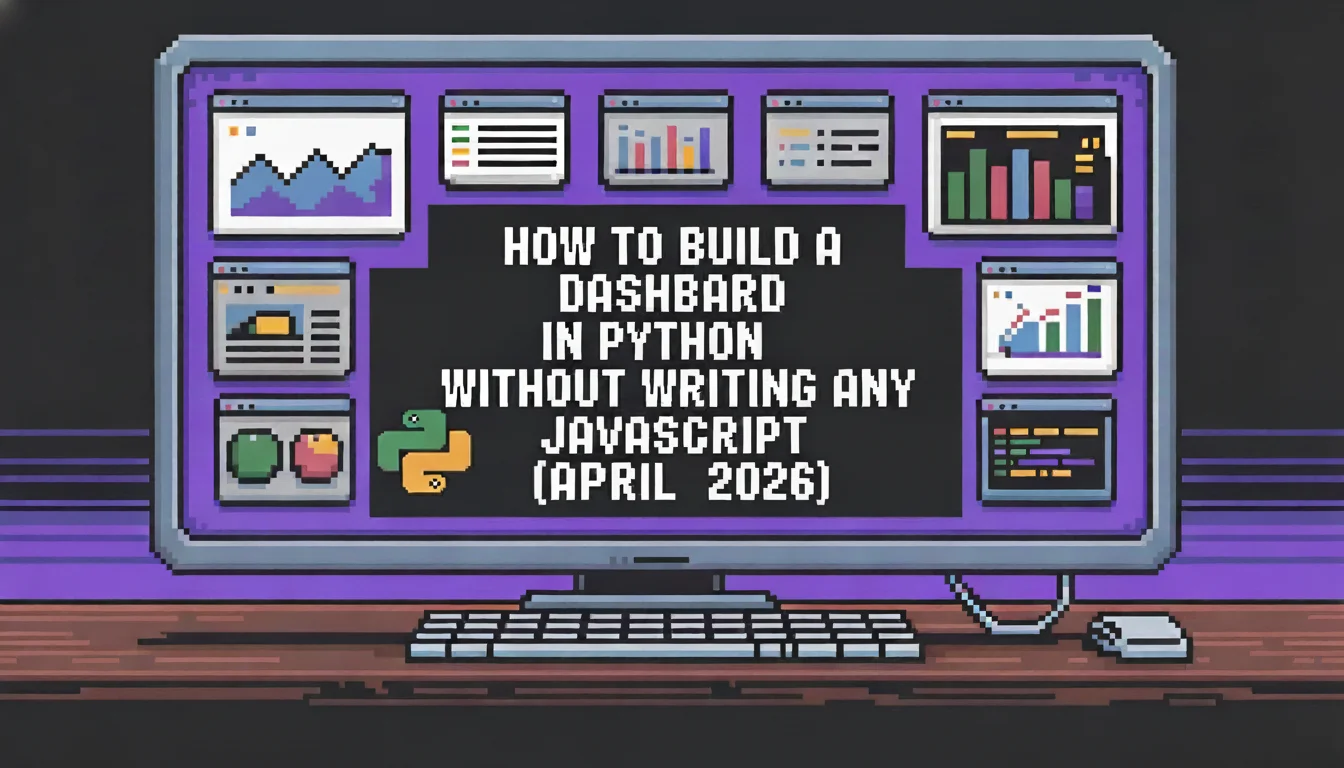
Learn how to build production dashboards in pure Python without JavaScript using Reflex. Real-time updates, 60+ components, one-command deploy. April 2026.
Tom Gotsman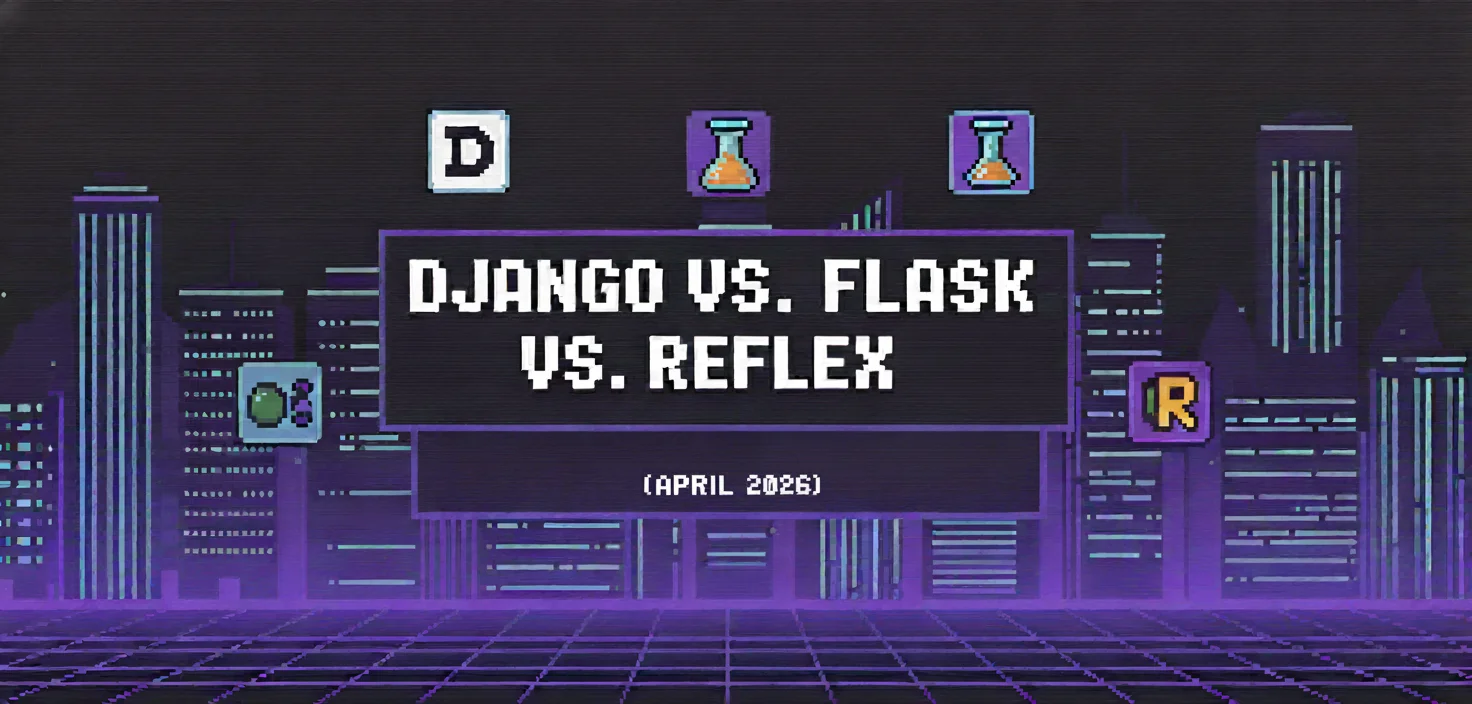
Compare Django, Flask, and Reflex for full-stack Python development. See performance, features, and use cases for each framework in April 2026.
Tom Gotsman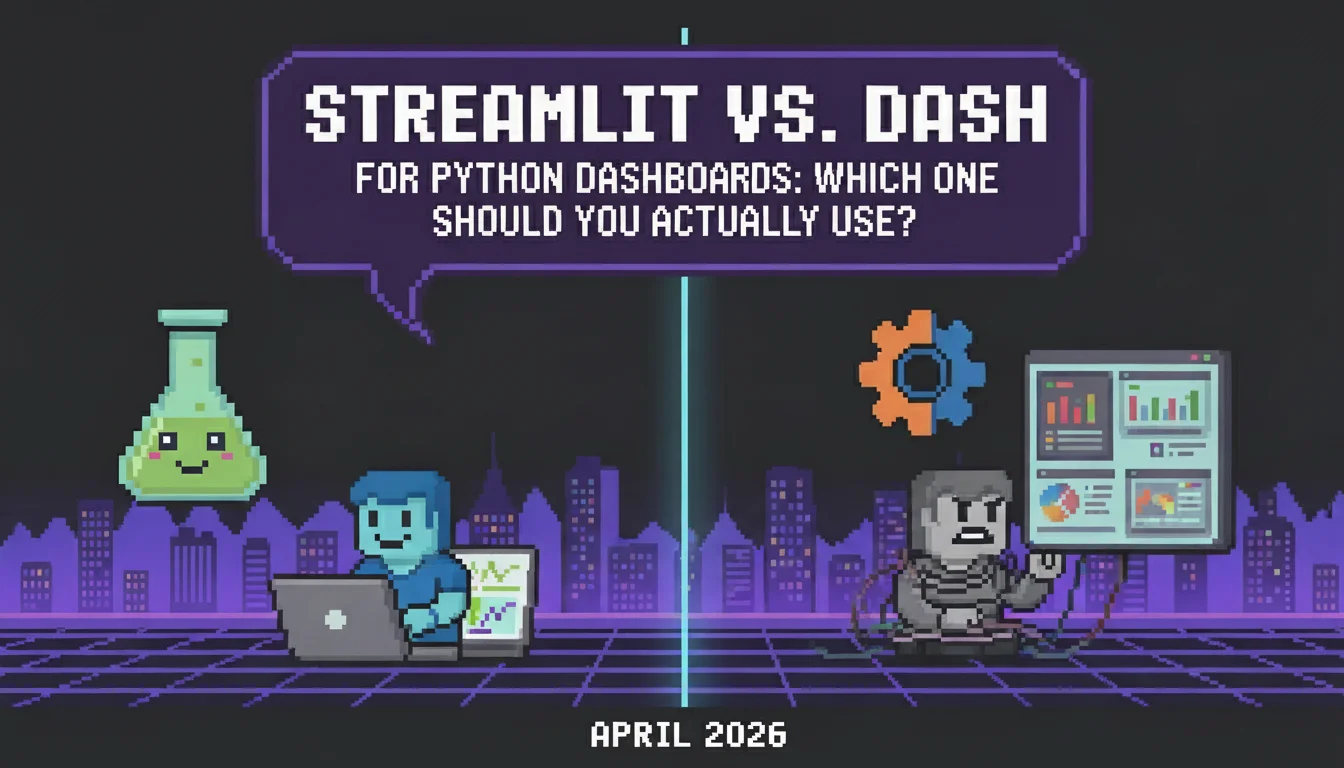
Streamlit vs. Dash for Python dashboards: Compare script reruns vs. callbacks, performance, and production features.
Tom Gotsman